Your Child's First Dental Visit in Bonsall & Fallbrook | What to Expect
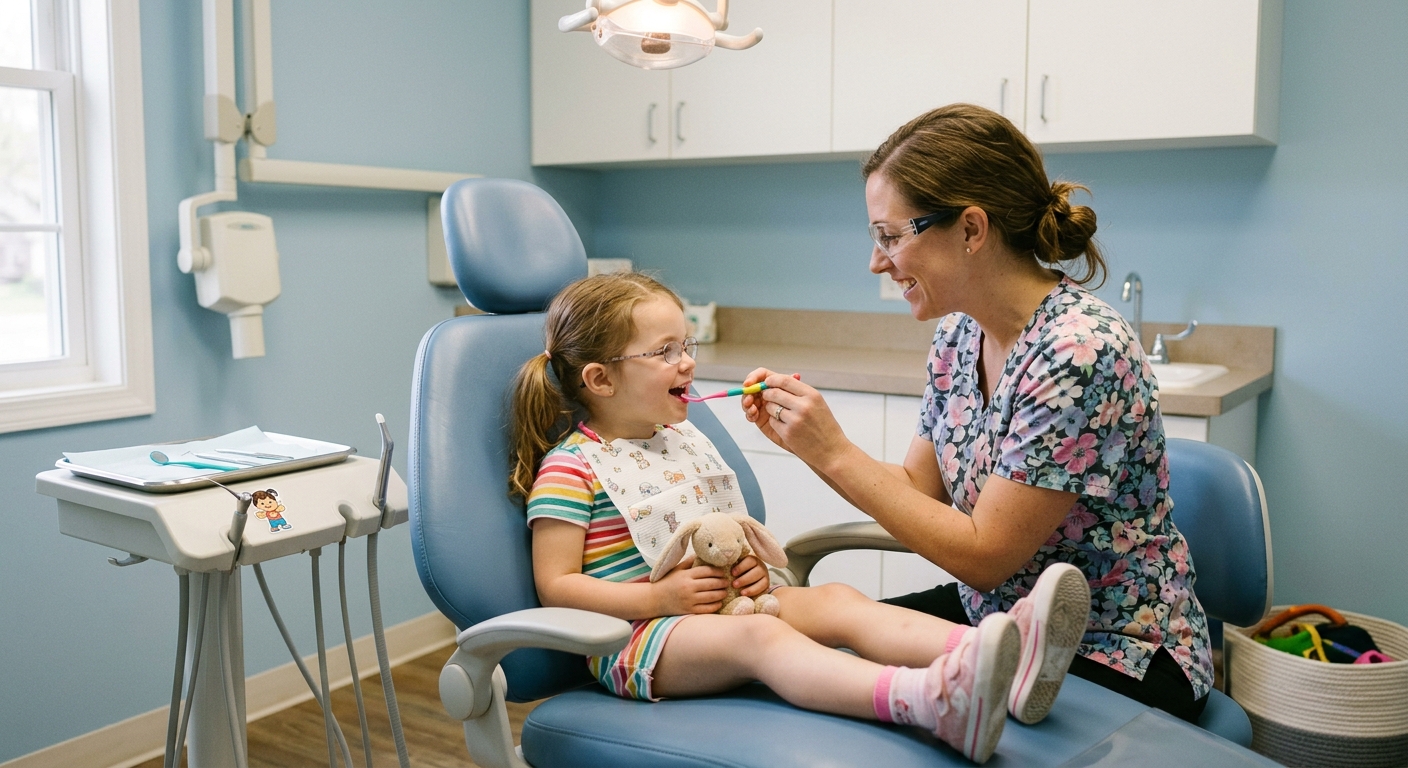
Your child's first dental visit is one of those parenting milestones that can feel more daunting than it needs to. Most of the anxiety belongs to the parent, not the child — and that's completely understandable. You want the experience to go well. You want your child to feel safe. And you're not entirely sure what "going well" even looks like for a one- or two-year-old in a dental chair.
At our Bonsall office, Drs. Stanton and Roberts have welcomed first-time patients ranging from wide-eyed one-year-olds to nervous five-year-olds — and plenty of nervous parents alongside them. This post walks you through everything you need to know before you arrive: when to come, what to expect, how to prepare your child, and what our team does to make the experience genuinely positive from the very first moment.
When Should Your Child Have Their First Dental Visit?
The American Academy of Pediatric Dentistry (AAPD) recommendation is clear: by age one, or within six months of the first tooth appearing — whichever comes first.
For most parents, this comes as a surprise. "They only have a few teeth — why so early?" The answer has less to do with cleaning those few teeth and more to do with establishing a baseline, catching any early concerns before they develop, and — most importantly — starting the relationship between your child and dental care on the right foot.
Children who visit the dentist early and regularly build familiarity with the environment, the team, and the routine. That familiarity is the single most effective protection against dental anxiety later in life. A child who has been coming to the same dental office since they were one year old doesn't grow up afraid of the dentist — because they've never had a reason to be.
If your child is older than one and hasn't had a first visit yet, that's okay. The right time to start is now, wherever you are. We see children at all stages and we always meet them where they are.
What Actually Happens During the First Visit
One of the most reassuring things we can tell parents: your child's first visit is gentle, brief, and entirely focused on making them feel comfortable. Here's what to expect.
A Warm Welcome
Our team knows that first visits set the tone for a lifetime of dental care. From the moment your child walks in, we're focused on making the environment feel friendly and unthreatening — talking to them at their level, letting them look around, and taking as much time as they need to get comfortable before anything clinical begins.
The "Knee-to-Knee" Exam for Infants and Toddlers
For very young children, the exam often happens with the parent seated across from the dentist, knee-to-knee, with the child lying back across both laps. This keeps the child close to you — which is reassuring for them — while giving the dentist a clear view of the teeth and gums. It's a gentler, less clinical position than a traditional dental chair, and most toddlers tolerate it remarkably well.
Gentle Examination of Teeth and Gums
The dentist will check every tooth that has come in, look at the gum tissue, assess bite development, and note anything worth monitoring. For infants and toddlers, this is a quick, non-invasive assessment — no drills, no needles, no procedures that feel threatening. The goal is information and connection, not treatment.
Fluoride Varnish
For children who are old enough, we apply a small amount of fluoride varnish to the teeth — a quick, painless step that strengthens developing enamel and provides meaningful protection against early childhood cavities. It's one of the most effective preventive tools we have for young children, and it takes about thirty seconds.
Parent Education and Q&A
Your child's first dental visit is as much about you as it is about them. We'll talk through home care habits — how to clean a baby's teeth, when to introduce a toothbrush, which toothpaste is appropriate at each age — as well as diet considerations, pacifier and thumb-sucking guidance, and what to watch for as new teeth come in. This conversation is one of the most valuable parts of the visit, and we encourage every question you have.
How to Prepare Your Child Before the Appointment
The way you talk about the first dental visit in the days leading up to it shapes how your child approaches it. A few simple approaches make a meaningful difference:
- Keep it casual and positive. Mention the visit matter-of-factly — "We're going to the dentist on Tuesday to meet the doctor and get your teeth checked" — rather than building it up as a big event or reassuring them preemptively that it "won't be scary." Children pick up on parental anxiety. If you feel calm, they're more likely to feel calm.
- Read books about going to the dentist. There are wonderful children's books about dental visits that normalize the experience in an age-appropriate way. The Berenstain Bears Visit the Dentist and Peppa Pig: Dentist Trip are favorites with younger kids. Reading them together in the week before the appointment plants a familiar, positive picture of what to expect.
- Avoid specific negative language. Words like "hurt," "shot," "drill," or "don't worry" cue a child to be worried. Stick to neutral, descriptive language: "The dentist is going to count your teeth and take a look to make sure they're growing nicely."
- Let the dental team take the lead. Once you're in the office, trust us. Our team works with young children every day and has a read on what each child needs — some warm up quickly with playful interaction, others need a quieter, more gradual approach. The more you can relax and let us guide the pace of the visit, the better it usually goes.
- Plan something enjoyable afterward. A trip to the park, a special snack, or a small reward after the visit gives your child something to look forward to and creates a positive association with dental appointments that compounds over time.
What If My Child Cries or Won't Cooperate?
This is the question we hear most often from parents before a first visit — and the answer is always the same: it is completely normal, and we are completely prepared for it.
Young children cry when things are unfamiliar. That's developmentally appropriate, not a sign that the visit went badly. Our team has navigated tearful first visits many times, and we approach them with patience, humor, and zero pressure. We never force a child through a procedure they're not ready for. If a visit needs to be shorter than planned because your child needs more time to warm up, we end on a positive note — praise, a sticker, a high five — and try again at the next appointment.
What matters most about a first dental visit is not that it goes perfectly. What matters is that your child leaves feeling okay about it. That foundation, built gradually over several early visits, is what produces a child who is genuinely comfortable at the dentist by the time they're school-age.
Ready to Schedule Your Child's First Visit in Bonsall or Fallbrook?
Drs. Stanton and Roberts welcome children of all ages — from first-tooth infants to teenagers — and take genuine pride in making every first visit a positive one. Families from Fallbrook, Bonsall, and across North San Diego County have been bringing their children to our practice for decades, and some of those children are now bringing their own kids in. That's the kind of relationship we're hoping to build with your family too.
If you have questions about what to expect before you come in, our team is always happy to talk through them ahead of your appointment. We want you to arrive feeling prepared and confident — because when you do, your child usually does too.
Request your child's first appointment at bonsalldentist.com or call our Bonsall office today. We look forward to meeting them.
Related Posts

Bad Breath in Fallbrook & Bonsall: Causes & What Actually Fixes It
Tooth Extraction in Fallbrook & Bonsall: When It's Necessary & What Comes Next
Diabetes & Dental Health in Fallbrook & Bonsall | What Every Diabetic Patient Should Know