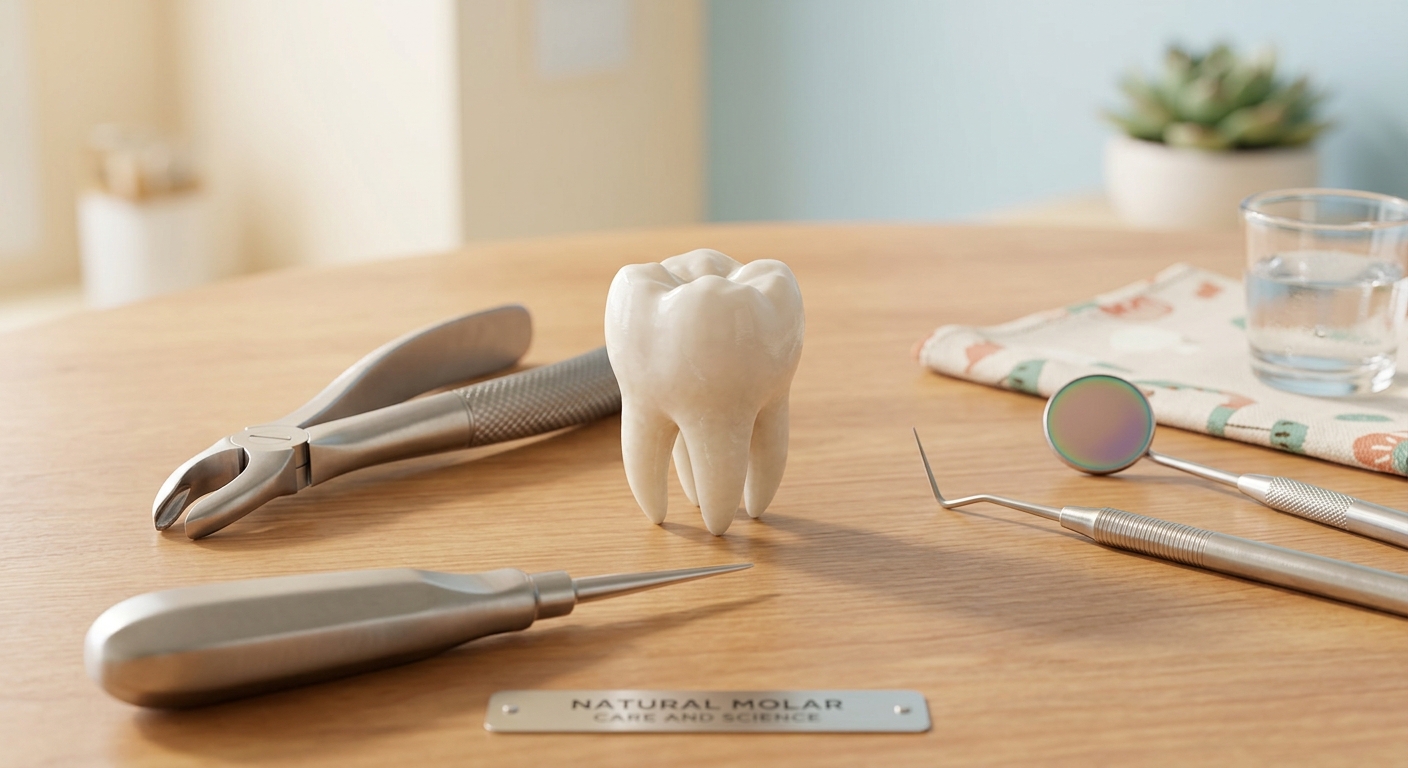
Tooth Extraction in Fallbrook & Bonsall: When It's Necessary & What Comes Next
The recommendation to extract a tooth is one that most patients receive with a mix of anxiety and reluctance — and understandably so. Losing a tooth feels significant, the procedure sounds intimidating, and the questions that follow are immediate: Will it hurt? What do I do afterward? Do I need to replace it?
Drs. Alexander Stanton and Christina Roberts want every patient in Fallbrook and Bonsall to approach this procedure with clear, honest information rather than dread. Tooth extraction — when it's truly indicated — is a straightforward procedure that relieves pain, protects the surrounding teeth, and opens the door to long-term solutions that restore full function. This guide answers every question we hear before, during, and after the process.
When Is Extraction Truly Necessary — And When Isn't It?
The first and most important question is whether extraction is the right choice at all. Preserving natural teeth is always our preference, and at our Bonsall practice we will exhaust every clinically appropriate alternative before recommending removal. That said, there are situations where extraction is genuinely the right answer — and where delaying it causes more harm than good.
Situations Where Extraction Is Appropriate
- Severe decay that has destroyed too much tooth structure. When a cavity has progressed to the point where there is insufficient healthy tooth remaining to support a crown or anchor a root canal restoration, extraction removes the source of infection and prevents it from spreading to surrounding teeth and bone.
- Advanced gum disease with significant bone loss. Periodontitis that has caused substantial bone loss around a tooth's roots can render it non-restorable — the support structure is simply no longer adequate to hold the tooth long-term. Extracting at this stage prevents the bone loss from spreading to neighboring teeth.
- A fractured tooth that cannot be structurally restored. Some fractures extend below the gumline or through the root in ways that make restoration impossible. A crown cannot hold what the root cannot support.
- Impacted wisdom teeth causing problems. Wisdom teeth that are fully or partially impacted — meaning they haven't fully erupted or have erupted at an angle — frequently cause pain, crowding pressure on neighboring teeth, and recurring infections in the surrounding gum tissue. Not all wisdom teeth need removal, but those causing active problems or posing clear structural risks do.
- Orthodontic treatment requiring space. Some patients need one or more teeth removed to create the space necessary for orthodontic correction. This is planned extraction performed as part of a larger treatment strategy.
Alternatives Worth Discussing First
If you've been told you need an extraction and you're not sure whether it's truly necessary, it's always reasonable to ask your dentist which specific clinical finding makes the tooth unrestorable — and whether a root canal, crown, or periodontal treatment might extend its life. At our practice, we present the honest picture: if a tooth can be saved and saving it makes long-term sense, we'll tell you. If it can't, we'll explain exactly why.
What the Procedure Actually Feels Like
Anticipatory anxiety about tooth extraction is almost always worse than the procedure itself. Here's what actually happens:
Anesthesia first — always. Before any instrument touches the tooth, local anesthetic is administered to completely numb the tooth, the surrounding gum tissue, and the bone. We take our time at this stage. Nothing proceeds until you are fully comfortable and the area is completely numb.
What you feel is pressure, not pain. Once numb, you will be aware that something is happening — there is pressure and movement as the tooth is loosened from its socket — but the sharp sensation of pain is blocked by the anesthetic. Most patients describe it as an unusual feeling rather than a painful one. If at any point you feel actual pain during the procedure, tell us immediately and we will add more anesthetic before continuing.
Simple vs. surgical extractions. A simple extraction is performed on a tooth that is visible above the gumline and can be removed in one piece with forceps. A surgical extraction — more common for impacted wisdom teeth or broken teeth — involves making a small incision in the gum tissue and sometimes sectioning the tooth into pieces for removal. Surgical extractions involve a slightly longer procedure and typically more post-operative soreness, but the experience during the procedure itself is similarly managed with anesthesia.
For anxious patients. If dental anxiety is a real factor for you, we offer nitrous oxide and oral sedation options that make the procedure significantly more manageable. Read our guide to dental anxiety and sedation options →
Aftercare: What to Do — and What Not to Do
How you care for the extraction site in the first 72 hours has a direct impact on how smoothly you heal. The most important goal during this window is protecting the blood clot that forms in the socket — this clot is the foundation of healing, and dislodging it is how dry socket develops.
The First 24 Hours
- Bite gently on the gauze placed after extraction and keep pressure on it for the time your dentist specifies — typically 30 to 45 minutes
- Apply an ice pack to the outside of your face in 20-minutes-on, 20-minutes-off cycles for the first several hours to manage swelling
- Eat soft, cool foods — yogurt, applesauce, scrambled eggs, smoothies drunk from a spoon rather than a straw
- Rest and avoid strenuous physical activity
- Take prescribed or recommended pain medication as directed, before the anesthetic wears off if possible
What to Strictly Avoid for 72 Hours
- Straws. The suction created by a straw is one of the most common causes of dry socket — it can pull the clot directly out of the socket
- Smoking or tobacco of any kind. The suction of smoking carries the same risk as straws, and the chemicals in tobacco impair healing significantly
- Vigorous rinsing or spitting. Gentle rinsing with warm salt water after the first 24 hours is appropriate — forceful rinsing is not
- Poking at the site with your tongue, a finger, or any object
- Hot foods and beverages in the first 24 hours
Recognizing Dry Socket
Dry socket is the most common complication of tooth extraction, occurring when the protective blood clot is lost before the socket has healed. It typically presents as a significant increase in pain 3 to 5 days after the extraction — just when most patients expect to be feeling better. The pain can radiate to the ear or jaw and is not relieved by standard over-the-counter pain medication.
If you experience this pattern, call our Bonsall office promptly. Dry socket is treatable — we place a medicated dressing in the socket that provides rapid relief and supports healing. It resolves completely with appropriate care.
What Comes Next: Replacing the Extracted Tooth
For most extractions — any tooth in the functional chewing area or the visible smile zone — replacing the missing tooth is an important part of the treatment plan, not an optional afterthought. An empty socket that isn't replaced sets off a chain of consequences over time: neighboring teeth drift toward the gap, the opposing tooth drifts down or up into the space, bite function is altered, and the jawbone at the site begins to resorb within months of the extraction.
The three main replacement options — and the ones we discuss with every extraction patient at our Bonsall office — are:
- Dental implant. The gold standard for tooth replacement. A titanium post is placed in the jawbone and topped with a custom crown, replacing both the root and the visible tooth. Implants preserve bone, function identically to natural teeth, and can last a lifetime. We place and restore implants entirely in-house — no referral to an outside specialist required. Learn more about our implant services →
- Fixed dental bridge. Crowns on the teeth adjacent to the gap support an artificial tooth spanning the space. Bridges are fixed in place, restore chewing function, and require no surgery. The trade-off is that healthy neighboring teeth must be shaped to support the bridge, and bone loss under the gap continues over time.
- Partial denture. A removable appliance that replaces one or more missing teeth. Lower cost upfront, no surgery required, and can replace multiple teeth at once. Less stable than implants or bridges during eating, and does not prevent bone resorption.
Timing matters for implants specifically — the longer bone is left to resorb after an extraction, the more bone grafting may be required before an implant can be placed. In some cases, we can place an implant at or shortly after the time of extraction, reducing the total treatment timeline.
Facing an Extraction in Fallbrook or Bonsall? Let's Walk Through It Together.
Whether you've just received an extraction recommendation you're not sure about, you're anxious about a procedure you know you need, or you're ready to discuss replacement options after a recent extraction — Drs. Stanton and Roberts are here to help you make an informed decision and move forward with confidence.
New patients from Fallbrook, Bonsall, and across North San Diego County are always welcome. We'll take the time to review your specific situation honestly and make sure you understand every option available to you.
Request your appointment at bonsalldentist.com or call our Bonsall office today.
Related Posts
Tooth Extraction in Fallbrook & Bonsall: When It's Necessary & What Comes Next

Diabetes & Dental Health in Fallbrook & Bonsall | What Every Diabetic Patient Should Know
Dental Crowns in Fallbrook & Bonsall | Same-Day CEREC | Do I Need a Crown?