Gum Disease Treatment in Fallbrook & Bonsall | Warning Signs & Care
Gum disease is the most common chronic infection in adults — and one of the most overlooked. It rarely causes significant pain in its early stages, which is precisely why so many patients in Fallbrook and Bonsall are unaware they have it until it has already done meaningful damage.
At our Bonsall dental office, Drs. Alexander Stanton and Christina Roberts screen every patient for signs of gum disease at every visit. Not because it's a formality — but because catching it early is the difference between a simple, reversible condition and one that requires long-term management and puts your overall health at risk.
Here's what every patient in Fallbrook and Bonsall should know.
The Two Stages of Gum Disease — And Why the Difference Matters
Gingivitis: Early, Reversible, and Often Symptom-Free
Gingivitis is the first stage of gum disease, characterized by inflammation of the gum tissue immediately around the teeth. It's caused by plaque — the bacterial film that accumulates on teeth daily — irritating the gums when it isn't removed consistently through brushing and flossing.
At this stage, the damage is limited to the soft tissue. The bone and ligaments that anchor your teeth are not yet affected. More importantly, gingivitis is completely reversible with a professional cleaning and improved home care habits. The gums can return to full health without any lasting consequence.
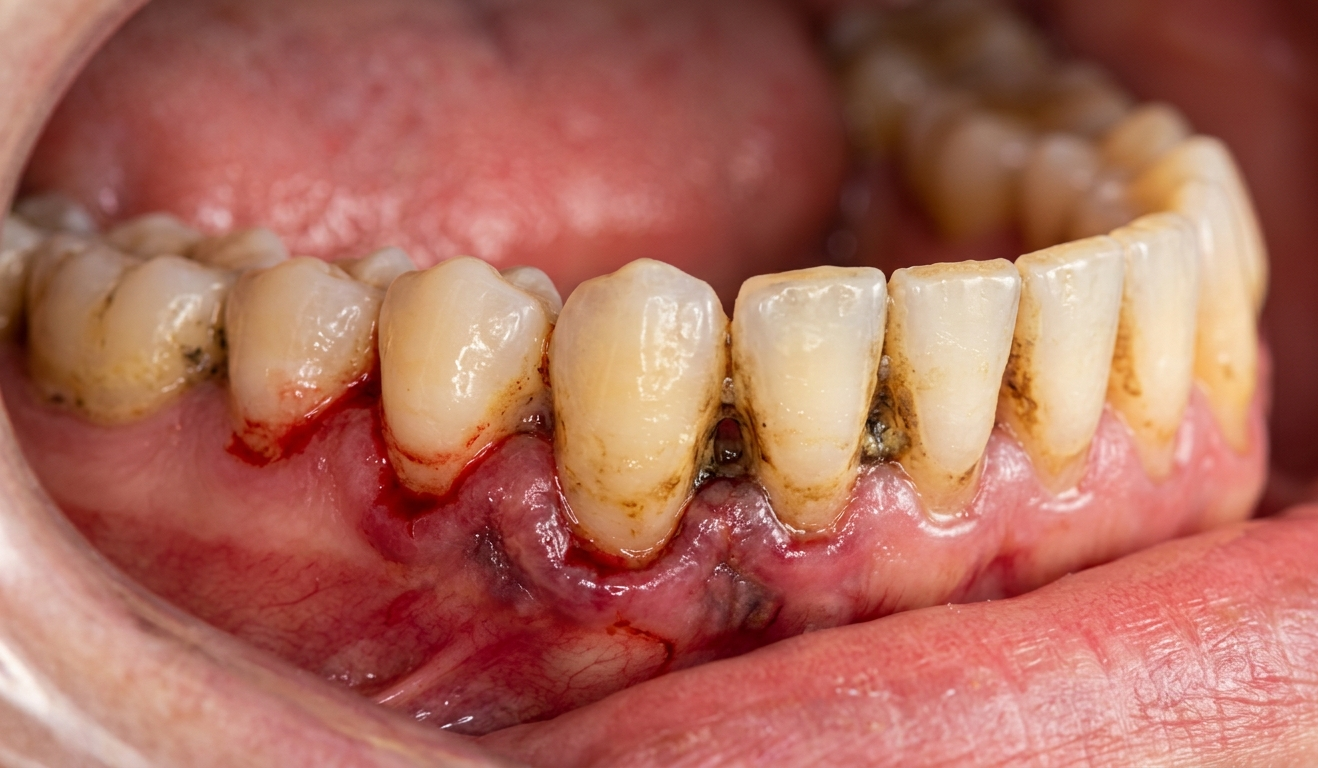
The challenge is that gingivitis often causes no pain at all. Mild bleeding when brushing, slightly puffy gum tissue, or a dull redness along the gumline are the only clues — and most people either don't notice or assume these are normal.
They are not.
Periodontitis: Advanced, Irreversible, and Serious
When gingivitis is left untreated, the infection progresses below the gumline into periodontitis. At this stage, bacteria have moved into the space between the tooth and the surrounding bone, forming pockets that deepen over time. The immune system's response to this bacterial invasion triggers the destruction of the bone and connective tissue that hold teeth in place.
This damage is permanent. Bone that is lost to periodontitis does not grow back. What periodontal treatment achieves — and it achieves it very effectively — is halting the progression and preserving what remains. But this makes early intervention critical: the earlier periodontitis is caught, the less damage has occurred and the more straightforward treatment becomes.
Left unaddressed for years, periodontitis is the leading cause of tooth loss in adults.
Warning Signs Fallbrook & Bonsall Patients Most Often Miss
Because gum disease progresses quietly, most patients don't recognize it until a dentist or hygienist points it out. These are the signs worth paying attention to:
- Bleeding when you brush or floss. This is the most common early warning sign — and the most frequently dismissed. Healthy gums do not bleed with normal brushing. Bleeding is a signal of active inflammation, not a sign that you're brushing too hard.
- Gums that look red, swollen, or darker than usual. Healthy gum tissue is firm and pale pink. Puffiness or a deeper red or purplish hue indicates inflammation.
- Persistent bad breath that doesn't resolve with brushing. The bacteria responsible for gum disease produce sulfur compounds that cause a distinctive odor. If bad breath is a recurring problem despite good hygiene, it warrants a closer look.
- Gums pulling away from the teeth. Recession exposes the root surfaces and makes teeth appear longer than usual. This can be a sign of advancing gum disease or aggressive brushing — both of which need attention.
- Teeth that feel loose or have shifted position. In more advanced periodontitis, bone loss around the roots causes teeth to loosen. Any change in how your teeth fit together when you bite is a reason to call your dentist promptly.
- Sensitivity along the gumline. As gums recede and roots become exposed, sensitivity to temperature and pressure often follows.
If any of these sound familiar, the right response is not to wait and see — it's to schedule an evaluation. Learn about our periodontal care and preventive services →
Professional Treatment Options at Our Bonsall Office
Scaling and Root Planing
For patients whose gum disease has progressed beyond what a routine cleaning can address, scaling and root planing is the standard — and highly effective — first-line treatment. It is sometimes described as a "deep cleaning," though it goes considerably further than that description suggests.
During scaling, your hygienist removes tartar and bacterial deposits from below the gumline using specialized instruments, reaching into the pockets that have formed around the roots. Root planing follows, smoothing the root surfaces so that the gum tissue can reattach to the tooth and bacteria have fewer rough surfaces to colonize.
The procedure is typically performed under local anesthetic for your comfort and completed over one or two appointments. Most patients notice a significant improvement in gum health in the weeks that follow — reduced bleeding, less inflammation, and shallower pocket depths at the follow-up evaluation.
Periodontal Maintenance
After active periodontal treatment, the goal shifts from treatment to management. Periodontal maintenance is an ongoing cleaning schedule — typically every three to four months — designed to prevent bacterial populations from rebuilding to levels that cause further damage.
This is not simply a more frequent version of a routine cleaning. Periodontal maintenance involves careful measurement of pocket depths, assessment of bone levels, and targeted cleaning below the gumline at each visit. It is the ongoing partnership between patient and dental team that keeps gum disease in check long-term.
Patients sometimes ask whether they'll need to stay on this schedule permanently. The honest answer is that most do — periodontitis changes the architecture of the gums and bone in ways that make six-month intervals insufficient. But with consistent periodontal maintenance, the vast majority of patients keep their teeth for life.
What You Can Do at Home Between Visits
Professional treatment is essential — but what happens at home between visits determines how well that treatment holds. For patients managing gum disease in Fallbrook or Bonsall, these habits make a meaningful difference:
- Brush twice daily with a soft-bristled toothbrush. Use gentle, circular strokes along the gumline rather than scrubbing back and forth. An electric toothbrush is more effective at plaque removal for most patients.
- Floss daily — and do it correctly. Flossing must reach below the gumline to be effective against gum disease, not just between the teeth. Curve the floss into a C-shape around each tooth and slide it gently beneath the gum tissue.
- Consider an antimicrobial mouth rinse. Rinses containing chlorhexidine or essential oils can reduce bacterial load between cleanings. Ask Dr. Stanton or Dr. Roberts whether a prescription or over-the-counter rinse is appropriate for your situation.
- Stop smoking. Tobacco use is one of the strongest risk factors for both developing and worsening gum disease. Smoking masks the bleeding that signals inflammation, impairs healing after treatment, and dramatically reduces treatment success rates.
- Manage systemic health conditions. Diabetes in particular has a bidirectional relationship with gum disease — each makes the other harder to control. Keeping blood sugar well-managed supports better gum health, and vice versa.
Gum Disease and Your Overall Health
The mouth doesn't operate in isolation from the rest of the body — and nowhere is this clearer than in the research on periodontal disease. The bacteria and inflammatory markers associated with gum disease enter the bloodstream, where they have been linked to a range of serious systemic conditions.
Studies have found associations between untreated periodontitis and increased risk of cardiovascular disease, poorly controlled type 2 diabetes, adverse pregnancy outcomes, and respiratory infections — particularly in older adults. The mechanism is not fully understood, but the pattern across decades of research is consistent enough that most physicians and dentists now view gum health as a meaningful component of overall health.
We've written more about this connection in a dedicated post: The Heart-Smile Connection: What Your Gums Reveal About Your Cardiovascular Health →
Common Questions About Gum Disease from Fallbrook & Bonsall Patients
Is gum disease reversible?
It depends on the stage. Gingivitis — the earliest stage — is fully reversible with a professional cleaning and improved home care. The gums can return to complete health with no lasting damage. Once gum disease advances to periodontitis, however, the bone and tissue loss that has occurred cannot be regenerated. What treatment achieves is halting further progression and stabilizing what remains — which, with consistent care, is enough for the vast majority of patients to keep their teeth long-term. This is why early detection is so important.
How often should I get a periodontal cleaning?
Patients with a history of gum disease typically benefit from periodontal maintenance every three to four months rather than the standard six-month interval. Periodontal bacteria repopulate treated pockets within approximately 90 days, which is why the three-month schedule was established — it keeps bacterial levels below the threshold where further damage occurs. Your specific interval will be based on how your gums respond to treatment and your individual risk factors.
Can gum disease come back after treatment?
Yes — periodontitis is a chronic condition, not a one-time fix. Treatment eliminates the active infection and reduces pocket depths, but the underlying susceptibility remains. This is why periodontal maintenance is not optional for patients who have had active disease. With consistent professional care and strong home habits, however, recurrence is very manageable and most patients remain stable for years.
What is scaling and root planing, and does it hurt?
Scaling and root planing is a deep cleaning procedure that removes tartar and bacteria from below the gumline and smooths the root surfaces to help gum tissue reattach. It is performed under local anesthetic, so the procedure itself is not painful. Some patients experience mild soreness and sensitivity in the days following, which typically resolves within a week. Our team at bonsalldentist.com is experienced in making this procedure as comfortable as possible.
Concerned About Your Gum Health? We're Here to Help.
Gum disease is treatable at every stage — but the earlier it's addressed, the simpler and more effective treatment becomes. If you've noticed any of the warning signs described above, or if it's simply been a while since your last visit, now is the right time to schedule an evaluation.
Drs. Stanton and Roberts welcome new patients from Fallbrook, Bonsall, and all of North San Diego County. We take gum health seriously because we know how much it matters — not just to your smile, but to your overall wellbeing.
Request your appointment at bonsalldentist.com or call our Bonsall office today.
Related Posts
Tooth Extraction in Fallbrook & Bonsall: When It's Necessary & What Comes Next

Diabetes & Dental Health in Fallbrook & Bonsall | What Every Diabetic Patient Should Know
Dental Crowns in Fallbrook & Bonsall | Same-Day CEREC | Do I Need a Crown?