Dental Crowns in Fallbrook & Bonsall | Same-Day CEREC | Do I Need a Crown?
When a dentist tells you that you need a crown, it's natural to have questions. What does a crown actually do? Is it really necessary? How much will it cost? How long will the process take? These are questions patients in Fallbrook and Bonsall ask us regularly — and they deserve straightforward, complete answers.
Drs. Alexander Stanton and Christina Roberts have placed hundreds of crowns for patients across North San Diego County, including same-day CEREC restorations that eliminate the second appointment entirely. This guide covers everything you need to know before you decide.
What Is a Dental Crown?
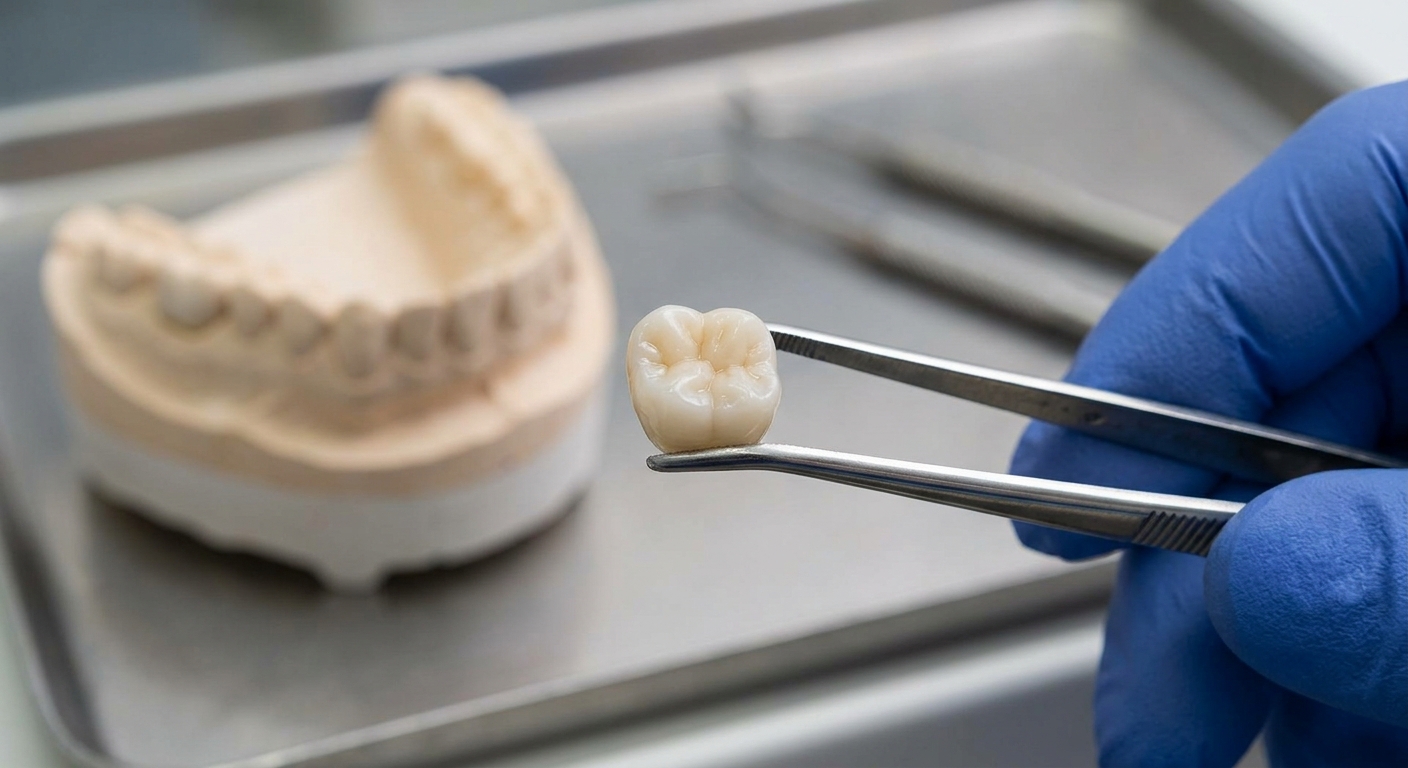
A dental crown is a custom-made cap that fits over the entire visible portion of a tooth — from the gumline up. Once cemented in place, it becomes the tooth's new outer surface, restoring its shape, strength, appearance, and function.
Crowns are used when a tooth has been damaged or weakened to the point where a filling is no longer sufficient to protect it. Rather than covering a portion of the tooth the way a filling does, a crown encases the entire tooth, distributing chewing forces evenly and preventing the kind of catastrophic fracture that can result in tooth loss.
A well-made crown, properly maintained, functions identically to a natural tooth. Most patients forget it's there within a few weeks.
When Do You Actually Need a Crown?
This is the question patients most often want answered honestly — and the honest answer is that not every dentist who recommends a crown is right to do so. Crowns are a significant restoration and should be recommended when the clinical evidence genuinely supports them. Here are the situations where a crown is typically the appropriate choice:
- A large cavity that undermines too much tooth structure for a filling to reliably restore. When decay removes so much of a tooth that what remains can't adequately support a filling, a crown protects what's left and prevents further breakdown.
- A cracked or fractured tooth. Cracks in teeth are more common than most people realize and don't always cause pain — until the crack propagates and the tooth splits. A crown holds a cracked tooth together and stops the crack from progressing.
- A tooth weakened by multiple previous fillings. Each time a filling is placed or replaced, some tooth structure is removed. Eventually, what remains is too fragile to function without the added protection of a crown.
- A tooth that has had a root canal. Root canal treatment removes the pulp tissue that keeps a tooth hydrated and flexible. The resulting tooth is significantly more brittle and prone to fracture under normal chewing forces. Crowning a root canal tooth is almost always recommended to protect the investment of the root canal itself.
- A broken cusp. When a significant portion of a tooth's biting surface breaks away — often from an old large filling giving way — a crown restores the tooth to full function.
- Cosmetic restoration. In some cases, crowns are placed to address severe discoloration, shape irregularities, or worn-down teeth where other cosmetic options are not sufficient.
If you've been told you need a crown and you're not sure why, ask your dentist to explain specifically which of these situations applies to your tooth. At our Bonsall practice, we always walk patients through the clinical reasoning before recommending any significant treatment.
Crown Materials: Porcelain vs. Zirconia
Modern dental crowns are most commonly made from one of two materials, each with distinct advantages depending on where in the mouth the crown is being placed.
Porcelain Crowns
Porcelain crowns offer the closest visual match to natural tooth enamel — they replicate the slight translucency and light-reflecting properties that make teeth look like teeth rather than painted surfaces. For front teeth, where aesthetics are the primary concern, porcelain remains the preferred material. The trade-off is that porcelain is more susceptible to chipping under heavy occlusal force than zirconia, which is why it's less commonly used for back molars.
Zirconia Crowns
Zirconia is an exceptionally strong ceramic material that has become the standard of care for back teeth in recent years. It is highly resistant to fracture under chewing forces, does not chip the way porcelain can, and modern milling technology has produced zirconia crowns with significantly improved aesthetics compared to earlier generations. For molars and premolars — the workhorses of the chewing system — zirconia is typically the right choice. At our Bonsall office, we mill both materials using CEREC technology, allowing us to select the best option for each individual tooth.
CEREC Same-Day Crowns: One Appointment Instead of Two
The traditional crown process involves two separate appointments. At the first, the tooth is prepared, an impression is taken, and a temporary crown is placed while the permanent crown is fabricated by an outside lab over the course of two to four weeks. At the second appointment, the temporary is removed and the permanent crown is cemented.
Temporaries are functional but imperfect — they can come loose, they're made of weaker material, and patients have to be careful about what they eat for the entire waiting period. Then there's the second appointment to schedule and attend, with a second round of anesthesia and chair time.
With CEREC technology at our Bonsall office, that entire process is compressed into a single appointment of approximately two hours. We prepare the tooth, take a digital scan rather than a physical impression, design the crown on-screen using CAD software, and mill the permanent restoration from a ceramic block right here in the office while you wait. The crown is then checked for fit, adjusted if needed, and cemented — all in one visit.
The result is a permanent, precisely fitted porcelain or zirconia crown that you leave with the same day. No temporary, no second appointment, no waiting. For patients in Fallbrook and Bonsall who are busy and would rather resolve a dental problem in one visit than two, the difference is significant.
Learn more about CEREC and our restorative services →
What Does a Crown Cost in Fallbrook & Bonsall?
In San Diego County, dental crowns typically cost around $1,800, depending on the material selected, the tooth being restored, and the complexity of the preparation. CEREC same-day crowns are priced comparably to traditional lab-fabricated crowns — the advantage is in the time saved, not the cost.
For patients with PPO dental insurance, crowns are classified as major restorative work and are typically covered at 50% of the allowable fee after the annual deductible is met.
A few things worth knowing about insurance and crowns:
- Frequency limitations apply. Most plans will only cover a crown on the same tooth once every five to seven years. If your crown was placed recently, a replacement may not be covered.
- Pre-authorization can be helpful. For major restorations, we can submit a pre-treatment estimate to your insurance company so you know exactly what you'll owe before the appointment.
- Year-end timing matters. If you've met your annual deductible and have remaining annual maximum available, scheduling a crown before December 31 allows your insurance to contribute to the cost before benefits reset.
Our front desk team handles insurance filing and verification for all patients and is glad to walk through your specific coverage before your appointment — no surprises.
Told You Need a Crown in Fallbrook or Bonsall? Let's Talk.
Whether you've just been told you need a crown for the first time or you've been putting off a recommendation for a while, Drs. Stanton and Roberts are glad to answer your questions, review your specific situation, and walk you through exactly what treatment would involve — including same-day options if CEREC is right for your case.
New patients from Fallbrook, Bonsall, and all of North San Diego County are always welcome. We'll verify your insurance benefits before your appointment so you know what to expect.
Request your appointment at bonsalldentist.com or call our Bonsall office today.
Related Posts

Your Dental Benefits Expire Dec 31 — Use Them Before They’re Gone

Looking for a Dentist Near Escondido, CA? Why North County Families Drive to Bonsall

Bad Breath in Fallbrook & Bonsall: Causes & What Actually Fixes It